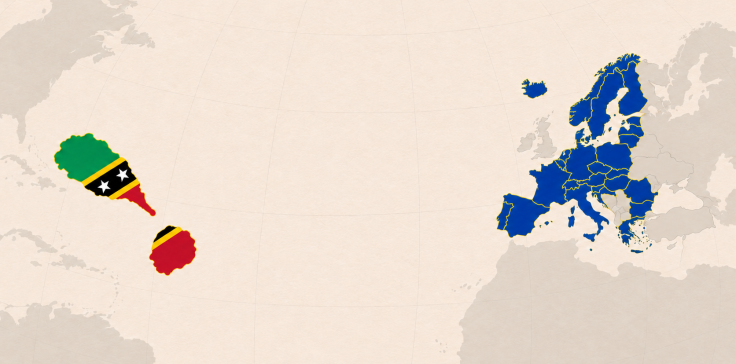
The debate over St. Kitts and Nevis’s Citizenship by Investment Program is too often reduced to one question: will CBI place our visa-free access to Europe at risk?
That is an important question, but it is not the only one. It may not even be the most important one.
People seek second citizenship for different reasons. International mobility matters, of course. But so do the ability to relocate, the opportunity to live in a safe and attractive country, the security of having a second option during a global shock, and the possibility of building a genuine life in a low-tax jurisdiction. For anyone considering tax residence, that must mean lawful, substantive residence and full compliance with the rules of all relevant countries—not the use of a passport as a shortcut around tax obligations.
The pandemic gave practical meaning to the idea of a “Plan B.” Borders closed, flights stopped and people discovered that where they had the right to live could matter more than where they had the right to visit. Citizenship is therefore not simply a travel product. It can be a long-term decision about family security, residence, investment, identity and opportunity.
Europe matters, but it is not the whole value proposition
St. Kitts and Nevis currently retains short-stay visa-free access to the Schengen area. The immediate issue is not that access has already been withdrawn, but that the EU now has broader powers to suspend it.
The EU’s revised visa-suspension regulation identifies investor-citizenship schemes as a possible ground for action, particularly where citizenship is granted in exchange for payment or investment without a genuine link to the country. That makes the European concern real. It does not make suspension automatic.
Losing visa-free access would reduce the program’s attractiveness, especially for applicants whose original nationality requires a Schengen visa. We should be honest about that. But it would not eliminate every other reason a serious investor might choose St. Kitts and Nevis, and it would not by itself prove that ending CBI is in the national interest.
The better question is one of proportionality: can the Federation address legitimate European security concerns without surrendering a sovereign development program that has generated substantial national value? I believe it can.
CBI’s national value is not theoretical
CBI has been one of the most consequential sources of public revenue in the Federation’s recent history. According to the IMF’s 2026 review, CBI fees were equivalent to 23.8% of GDP in 2021, 25.8% in 2022 and 22.2% in 2023. During those years, CBI receipts exceeded total tax revenue.
That is an extraordinary contribution for a small island state with limited fiscal options and high exposure to hurricanes, pandemics, imported inflation and external economic shocks.
The latest figures also require honesty. CBI fees fell to an estimated 8.6% of GDP in 2024 and 6.0% in 2025. The government is right to diversify the economy and reduce structural dependence on a volatile revenue stream. But diversification is not the same as voluntarily abandoning a valuable program. It means using CBI responsibly while building other sources of growth and revenue.
St. Kitts and Nevis has not stood still
The strongest case for preserving CBI is not that the program was perfect. It is that St. Kitts and Nevis has shown that the program can be reformed.
The European Commission’s 2025 report acknowledges that, in response to concerns expressed by the EU, the five Eastern Caribbean CBI states harmonized their minimum investment threshold at US$200,000, strengthened security screening, and established common information-sharing and transparency standards. St. Kitts and Nevis has also introduced or advanced the following measures:
- Mandatory interviews and deeper due diligence. Applicant interviews were introduced, while the regional framework calls for enhanced screening, information-sharing and additional Financial Intelligence Unit checks.
- Higher and harmonized investment standards. St. Kitts and Nevis raised program thresholds and joined the Eastern Caribbean commitment to a regional minimum, intended to prevent destructive price competition and underselling.
- A professionalized statutory Citizenship Unit. The Citizenship by Investment Unit Act, 2024 converted the Unit from a government department into a statutory corporation, with formal governance and reporting responsibilities.
- Regional regulation and enforcement. Parliament passed the ECCIRA Agreement Bill in October 2025. The regional model is designed to establish uniform standards, compliance reporting, applicant and agent registers, penalties and revocation powers across participating states.
- Restricted-country controls. The European Commission’s 2025 report records that St. Kitts and Nevis excluded applicants from Russia, Belarus, Iran, Iraq, North Korea and Afghanistan.
- Biometric identity and passport security. The National Biometric Enrollment and Passport Modernization Program launched in April 2026. Biometrics are mandatory for new applicants, existing CBI citizens must enroll during the transition period, and biometric enrollment was integrated with passport production from September 2026.
- Movement toward residency and a genuine link. The government has announced a residency feature and has been developing a program model based on a more substantive connection between the citizen and the Federation. This responds directly to one of the central concepts in the EU’s revised regulation.
The European Commission’s own figures add important context. Its 2025 Visa Suspension Mechanism report recorded 98 rejections from 223 applications in St. Kitts and Nevis during 2024—a 43.9% rejection rate. That was the highest of the five Eastern Caribbean CBI countries in the Commission’s table. The same report showed applications falling from 1,987 in 2023 to 223 in 2024.
Those figures do not settle every question, but they are difficult to reconcile with the idea that St. Kitts and Nevis simply approves anyone willing to pay.
What should happen next
The Federation should not dismiss the EU’s concerns, and it should not respond with defiance for its own sake. Visa-free access is valuable, international financial relationships are critical and program integrity is in our own national interest.
The answer is continued reform within reason. A credible next phase should include:
- a meaningful but practical residence or participation requirement that establishes a genuine link;
- full implementation and independent testing of biometric enrollment;
- annual publication of applications, approvals, rejections, revocations and program revenue;
- independent audits of due diligence and compliance systems;
- strong controls for revoked citizenship and passports;
- continued information-sharing through CARICOM IMPACS and the regional regulator;
- enforceable rules for agents and marketing, including penalties for underselling or misleading claims; and
- transparent reporting on how CBI revenue is used for national development and resilience.
These measures would make the program more defensible internationally and more accountable at home.
The government should also ask the EU for clear, measurable standards. A constructive relationship cannot rest on constantly moving expectations or the assumption that every CBI program is unacceptable regardless of its safeguards. If the central concern is the absence of a genuine link, then the discussion should focus on what constitutes a sufficient link, how it can be verified and how compliance will be assessed.
Reform the program without reducing the debate to one travel benefit
St. Kitts and Nevis should continue to protect its visa-free relationships wherever possible. But national policy cannot be based on the idea that access to Europe is the only reason for citizenship or the only measure of the program’s worth.
CBI has helped finance the Federation, support investment and provide resilience in a country with limited fiscal space. It offers applicants more than convenience at an airport: it can offer a home, a lifestyle, a genuine alternative and a long-term connection to St. Kitts and Nevis.
The right response is neither complacency nor surrender. It is to preserve the program by making it stronger, more transparent and more closely connected to the country itself.
Europe’s concerns should be taken seriously. So should the interests of the people of St. Kitts and Nevis.
Wayne Tyson | Nevis Style Realty
Editorial note: This article expresses the author’s personal perspective. It does not constitute legal, tax, immigration or investment advice.
Recent Blog Posts
Archives
- November 2026 (1)
- September 2026 (1)
- August 2026 (1)
- July 2026 (1)
- April 2026 (2)
- March 2026 (1)
- January 2026 (2)
- November 2025 (1)
- October 2025 (1)
- August 2025 (1)
- July 2025 (1)
- November 2024 (2)
- October 2024 (1)
- August 2024 (1)
- February 2024 (1)
- January 2024 (1)
- October 2023 (1)
- September 2023 (2)
- August 2023 (1)
- July 2023 (1)
- June 2023 (1)
- March 2023 (1)
- November 2022 (1)
- October 2022 (1)
- September 2022 (1)
- May 2022 (1)
- April 2022 (1)
- March 2022 (1)
- February 2022 (2)
- January 2022 (1)